
Crochet Rectangular Granny Square Pattern is a versatile project for crocheters who love the familiar look of granny-square stitches but want a longer, more adaptable shape. Unlike a traditional square motif, a rectangular granny square can be especially useful for blankets, scarves, table runners, bags, cushions, and other handmade projects where a rectangular format is more practical.
A Crochet Rectangular Granny Square Pattern offers many opportunities to experiment with colors, borders, yarn textures, and stitch combinations. The classic clusters of stitches create an attractive open texture, while the rectangular construction allows you to build projects with different proportions without giving up the recognizable granny-square appearance.
One of the most appealing features of a crochet rectangular granny square is its flexibility. You can create a small motif for a decorative project or continue adding rounds to make a larger piece. Whether you prefer soft neutrals, vibrant color changes, or a simple one-color design, this technique can be adapted to many crochet styles.
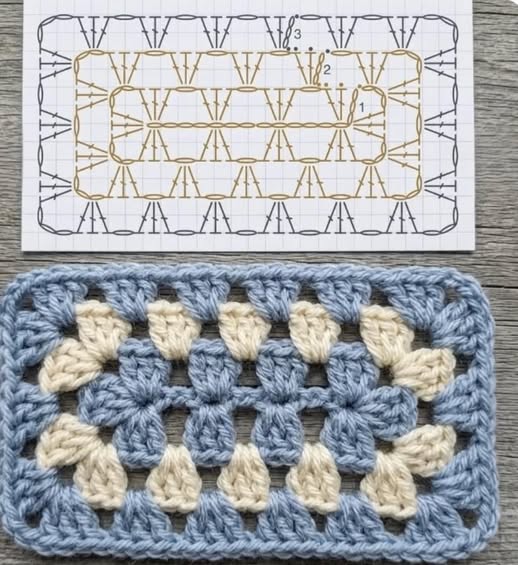
Understanding the Crochet Rectangular Granny Square Pattern
A Crochet Rectangular Granny Square Pattern follows the basic concept of traditional granny-square crochet while developing a rectangular rather than perfectly square shape. The project is commonly worked in rounds, with strategically placed increases helping maintain the longer dimensions.
The familiar granny stitch is usually made from groups or clusters of stitches separated by chain spaces. These clusters create the open, textured appearance associated with classic granny crochet.
The corners and turning points require particular attention because the shape depends on placing the correct stitches and chain spaces in the appropriate locations. Following the pattern carefully can help maintain the intended proportions.
One advantage of rectangular construction is that you can create longer motifs without having to join numerous small squares. This can make certain projects simpler because there are fewer individual pieces to assemble.
The border can be simple or decorative. A final round in a contrasting color can frame the motif, while a matching border can create a more subtle appearance.
Before beginning your crochet rectangular granny square, read the complete instructions and identify the starting chain, stitch sequence, corner construction, color changes, and recommended finishing method. Understanding the repeat beforehand can make the project much easier to follow.
How to Crochet a Rectangular Granny Square
Begin your Crochet Rectangular Granny Square Pattern by selecting your yarn and crochet hook. Choose materials that are appropriate for the final project and comfortable for your crochet tension.
Start with the foundation according to the pattern. The initial chain or center construction establishes the basic length and width of the rectangle, so count carefully.
Work the first round slowly and pay close attention to the corners. The placement of the granny clusters and chain spaces determines how the shape develops.
As you continue adding rounds, maintain the same stitch sequence throughout. It can help to identify the longer sides and shorter ends of the rectangle so that you can recognize where each type of increase belongs.
Check the shape regularly. If the rectangle begins to become too square, too narrow, or uneven, review your stitch count before continuing with additional rounds.
Complete the desired number of rounds and add the final border. Weave in the loose ends securely, then gently block the finished crochet rectangular granny square if appropriate for your yarn. If you are creating several matching motifs, compare their measurements before joining them.
Choosing Yarn and Colors
Yarn selection can dramatically influence the appearance of a Crochet Rectangular Granny Square Pattern. Smooth yarns can make the granny clusters clearly visible, while textured yarns can create a softer and more dimensional appearance.
Cotton can be useful for projects such as table runners, bags, and decorative accessories, while acrylic and blended yarns can provide a wide range of colors for blankets and throws.
A single color can create a clean and modern result. This approach allows the texture of the granny stitches to become the main visual feature.
For a more traditional appearance, change colors after every round or alternate between a small group of coordinated shades. This can create clearly defined rings around the center.
Pastels can produce a delicate appearance, while jewel tones can make the rectangle more dramatic. Neutral combinations such as cream, beige, gray, and brown can create a timeless design.
When using multiple colors, plan the sequence before beginning. A simple color chart or written list can help you maintain the same order across several motifs.
Tips for Making Consistent Rectangular Granny Squares
Consistent tension is essential when creating a Crochet Rectangular Granny Square Pattern, especially when several motifs will be joined together. Differences in tension can cause pieces to have noticeably different dimensions.
Count your clusters and chain spaces regularly. Because the shape depends on a repeating structure, an incorrect stitch count can gradually distort the rectangle.
Pay special attention to the corners. If one corner is constructed differently from the others, the finished motif may become uneven or twist as additional rounds are added.
Avoid pulling chain stitches too tightly. Tight chains can restrict the fabric and make the corners difficult to shape.
Blocking can help improve the appearance of a completed crochet rectangular granny square. It can straighten the edges and make several pieces easier to align before joining.
Finally, keep your yarn ends organized. If you change colors frequently, weaving in ends as you go can prevent a large amount of finishing work from accumulating at the end of the project.
Frequently Asked Questions About Crochet Rectangular Granny Square Pattern
What is a Crochet Rectangular Granny Square Pattern?
A Crochet Rectangular Granny Square Pattern is a granny-style crochet motif designed with a rectangular shape instead of equal-length sides. It can be used for blankets, scarves, bags, runners, and many other projects.
Is a rectangular granny square difficult to crochet?
It can be relatively straightforward if you already understand basic granny-square construction. The main difference is learning how the increases are arranged to maintain the rectangular shape.
What yarn is best for rectangular granny squares?
The best yarn depends on the finished project. Cotton can work well for structured accessories, while acrylic, wool blends, and other yarns can be suitable for blankets and decorative pieces.
Can beginners make a rectangular granny square?
Yes. Beginners who understand basic crochet stitches and granny clusters can often learn the technique with practice. Start with a small sample to understand the construction.
Why is my rectangle becoming a square?
This may happen if the increases are being placed incorrectly or if the longer sides are not receiving the required stitch groups. Review the pattern and check your stitch counts.
Why are my edges wavy?
Wavy edges can result from incorrect increases, excess stitches, or uneven tension. Check the stitch sequence before continuing with additional rounds.
Why is my rectangular granny square curling?
Curling can occur because of tight tension, incorrect stitch placement, or insufficient chain spaces. Verify the pattern and consider whether blocking is appropriate for your yarn.
Can I make the rectangle larger?
Yes, many patterns allow additional rounds. However, maintain the established increase structure so the motif continues expanding proportionally.
Can I make a blanket from rectangular granny squares?
Absolutely. Rectangular motifs can be joined to create blankets and throws. You can combine matching rectangles or alternate colors and sizes for a patchwork effect.
Can I use several colors?
Yes. Changing colors between rounds is a popular way to emphasize the rectangular structure and create decorative bands.
Can I make a rectangular granny square in one color?
Definitely. A one-color design can look elegant and modern, particularly when the stitch texture is clearly defined.
How do I join rectangular granny squares?
Depending on the project, you can sew them together or use a crochet joining method. Choose a method that complements the thickness and appearance of the motifs.
Should I block rectangular granny squares?
Blocking can be helpful for improving the shape and aligning edges. The suitability of blocking depends on the yarn fiber and the desired result.
Can I use leftover yarn?
Yes. Rectangular granny squares are excellent for using coordinated yarn scraps. Just make sure the yarns have reasonably compatible weights and textures.
What projects can I make with a rectangular granny square?
You can use them for blankets, scarves, bags, table runners, cushion covers, wraps, wall decorations, and many other handmade items.
Conclusion
A Crochet Rectangular Granny Square Pattern combines the classic charm of granny crochet with a shape that can be especially useful for practical projects. The familiar clusters and open texture remain recognizable, while the rectangular construction offers additional design possibilities.
The most important part of the process is maintaining the correct structure. Pay attention to the foundation, corner placement, stitch counts, and tension so that the motif develops evenly.
We hope this Crochet Rectangular Granny Square Pattern guide has given you useful ideas for your next crochet project. Share your honest opinion about the technique, tell us which colors you would choose, and leave suggestions for other crochet patterns you would like to see in future articles.