
If you adore charming quilt designs that mix vintage elegance with playful personality, the Cat in the Attic Quilt – FREE Pattern might be your next favorite project. This delightful design combines the timeless beauty of the classic attic windows block with sweet feline details that instantly capture attention.
Perfect for both beginners and experienced quilters, this project allows you to explore perspective techniques while showcasing adorable cat fabrics or appliqué designs. More than just a quilt, this pattern creates a cozy story told through fabric — a warm and personal touch for your home.
In this guide, you’ll discover how the design works, what materials you’ll need, step-by-step construction tips, and creative ways to personalize your quilt.
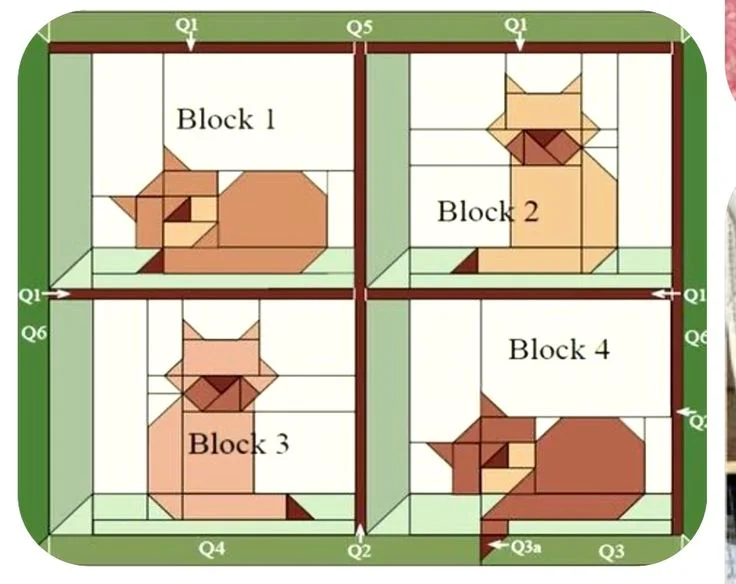
The Cat in the Attic Quilt is inspired by the traditional attic windows block. This quilting style uses angled strips to create a realistic 3D window effect, giving the illusion that you’re peeking into a tiny room.
Instead of simply showcasing decorative fabric, this version places charming cats inside each “window.” The result? A quilt full of personality and depth. Each block feels like a little scene — a cat resting, stretching, or playfully watching the world outside.
One of the best things about this pattern is its flexibility. You can choose realistic cat prints, whimsical cartoon kitties, or even create custom appliqué shapes. Whether you prefer soft neutral tones or vibrant colors, the design adapts beautifully to your style.
This pattern also works wonderfully as a scrap-buster project. Fat quarters and leftover fabric pieces can be mixed and matched to create a lively, colorful effect.
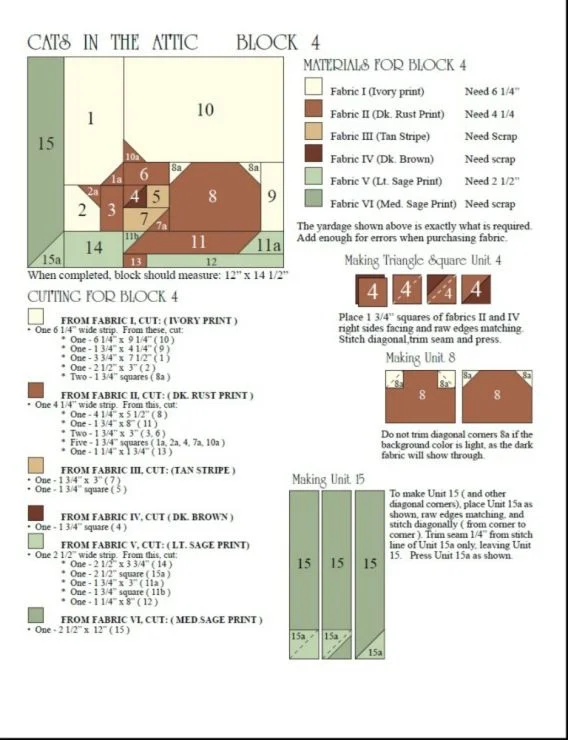
Many quilting websites offer the Cat in the Attic Quilt FREE pattern as a downloadable PDF. These versions typically include cutting charts, diagrams, and beginner-friendly instructions.
2. Materials and Tools You’ll Need
Before starting your quilt, gather your essential quilting supplies to ensure a smooth process.
Basic Tools:
- Rotary cutter
- Self-healing cutting mat
- Quilting ruler
- Sewing machine
- Iron and ironing board
- Pins or fabric clips
Fabric Choices:
For the window frames, select high-contrast cotton fabrics to enhance the 3D illusion. Quilting cotton is ideal because it’s durable and easy to work with.
For the center squares, choose cat-themed fabric panels or prepare appliqué designs. You can even personalize the quilt using printed photos transferred onto fabric for a truly meaningful touch.
Batting & Backing:
Light to medium loft batting is recommended for easier quilting. For backing fabric, you can use a coordinating print or a solid color that highlights the quilt top.
Thread selection is also important. Neutral tones blend seamlessly, while decorative thread can add subtle detail to your quilting lines.
Preparing all materials in advance will make the entire quilting experience more enjoyable and organized.
3. Step-by-Step: Constructing the Quilt Blocks
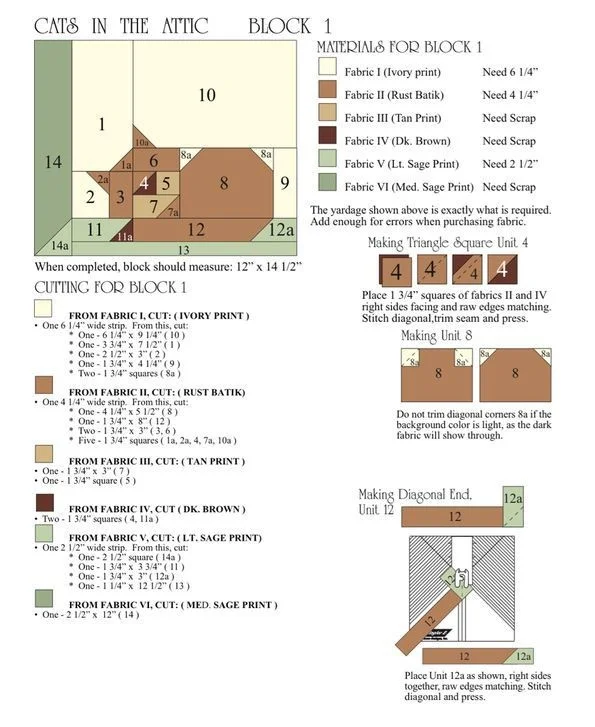
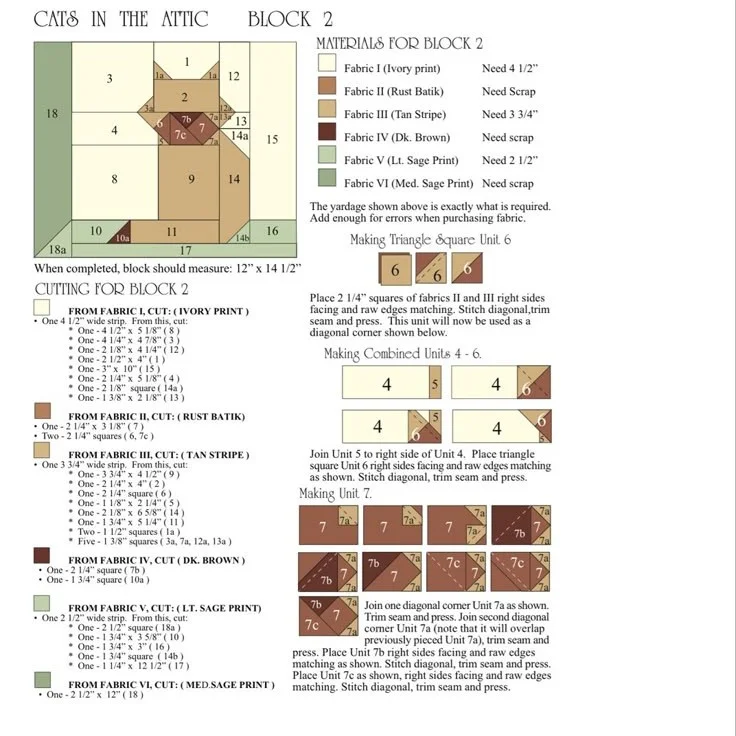
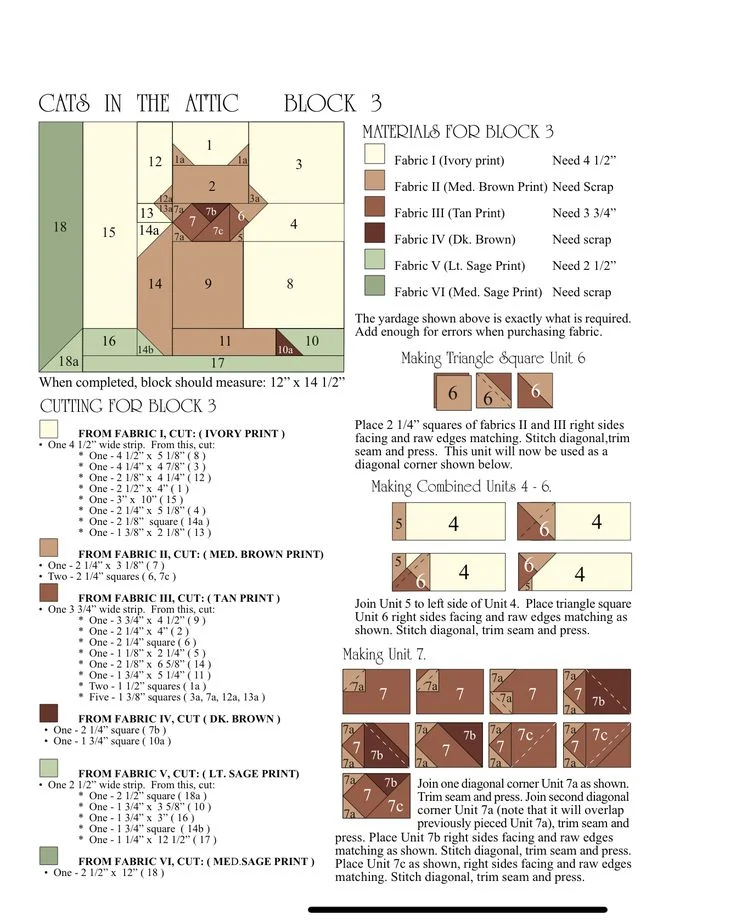
Start by carefully cutting your fabric pieces according to the FREE pattern instructions. Each attic window block usually consists of a center square and three frame strips that create the angled window effect.
Sew the side and bottom strips to the center square using diagonal seams. This angled technique creates depth, making it look like you’re gazing through a window into a cozy space.
Next, position your cat fabric in the center. If you’re using appliqué, stitch it securely using raw-edge, blanket stitch, or decorative stitching for added detail.
Once you’ve completed multiple blocks, lay them out on a flat surface or design wall. Rearrange until you achieve a pleasing balance of colors and cat images.
Sew the blocks together row by row, pressing seams carefully to keep everything aligned. Consistent seam allowances are essential for a polished finish.
After assembling the quilt top, layer it with batting and backing. Quilt as desired — straight-line quilting enhances the geometric look, while free-motion quilting adds softness and creativity.
4. Finishing Details and Creative Ideas
Binding is the final step that frames your quilt beautifully. Choose a fabric that complements both the top and backing. You can machine stitch the binding for durability or hand stitch it for a classic finish.
Adding a quilt label on the back gives your project a professional touch. Include your name, the date, and perhaps a short message.
If the quilt is intended as a gift, consider adding personalized embroidery — initials, a special date, or even the recipient’s pet name.
You can also expand the theme by creating matching pillow covers, mini wall hangings, or table runners using leftover fabric pieces.
Sharing your finished quilt on social media or quilting groups is a wonderful way to connect with fellow crafters and inspire others to try the pattern.
FAQ – Cat in the Attic Quilt FREE Pattern
Where can I find the free pattern?
You can discover free versions of this pattern on quilting blogs, crafting websites, and pattern-sharing communities.
Is this project beginner-friendly?
Yes! While the attic window effect looks advanced, the construction is straightforward with proper instructions.
What block size is recommended?
A common finished size is 12” x 12”, but this may vary depending on the pattern version.
Can I replace printed cat fabric with appliqué?
Absolutely. Appliqué allows complete customization and makes the quilt even more unique.
How long does it take to finish?
The timeline depends on the quilt size and your experience level. Many quilters complete it over a few weekends.
Final Thoughts
The Cat in the Attic Quilt – FREE Pattern is a beautiful blend of tradition and playful creativity. It transforms a classic quilt block into something heartwarming and full of character. Whether you’re making it for yourself or as a gift for a fellow cat lover, this project is sure to bring joy.
Now it’s your turn! Download the pattern, choose your favorite fabrics, and start sewing your own charming attic scene.
If you enjoyed this article, leave a comment below and share your thoughts or suggestions for future quilting tutorials.