The Crochet Coral Reef Pattern is a fascinating crochet project inspired by the vibrant colors, textures, and natural forms found beneath the ocean’s surface. Combining artistic freedom with traditional crochet techniques, this project allows crafters to transform simple yarn into stunning coral-inspired creations that resemble living marine landscapes.
Unlike conventional crochet patterns that rely on precise shapes and repetitive stitch sequences, coral reef crochet celebrates asymmetry and organic growth. Every piece develops its own character, making each finished reef a one-of-a-kind work of textile art.
Whether you are interested in home decoration, educational displays, crochet sculptures, or creative fiber art projects, a crochet coral reef offers unlimited opportunities for experimentation and self-expression.
What Makes Crochet Coral Reef Patterns Unique?
One of the most appealing features of crochet coral reefs is their ability to imitate the irregular beauty of nature. Real coral formations are never perfectly symmetrical, and crochet versions embrace that same natural variation.
Designers often combine spirals, ruffles, loops, shells, clusters, and textured stitch combinations to reproduce the appearance of marine organisms. The result is a highly dimensional project filled with movement and visual interest.
Because there are no strict rules regarding shape or arrangement, crocheters can adapt the project to suit their own artistic vision while maintaining the underwater theme.
Understanding the Basic Structure
A crochet coral reef is generally constructed from multiple independent pieces rather than a single continuous pattern.
These components may include:
- Spiral coral formations
- Branching coral structures
- Sea fan inspired motifs
- Ruffled coral sections
- Textured surface elements
- Decorative filler pieces
Once completed, the individual motifs are assembled together to create a layered underwater composition.
This modular approach allows crocheters to work on small sections individually before combining them into a larger display.
Best Yarn Choices for Crochet Coral Reefs
Selecting appropriate yarn is essential for achieving realistic textures and striking visual effects.
Acrylic Yarn
Acrylic remains one of the most popular options because it is affordable, easy to find, and available in hundreds of vibrant colors.
Cotton Yarn
Cotton yarn provides excellent stitch definition and helps highlight intricate details throughout the project.
Specialty Yarns
For additional texture, many crocheters incorporate:
- Bouclé yarn
- Ribbon yarn
- Eyelash yarn
- Variegated yarn
- Metallic yarn
Combining different textures creates depth and enhances the organic appearance of the reef.
Recommended Crochet Supplies
To create your own crochet coral reef, gather the following materials:
- Assorted yarn colors
- Crochet hooks in various sizes
- Scissors
- Yarn needle
- Stitch markers
- Fiberfill stuffing (optional)
- Floral wire (optional)
- Blocking supplies
Having multiple hook sizes available makes it easier to create varied textures and dimensions throughout the project.
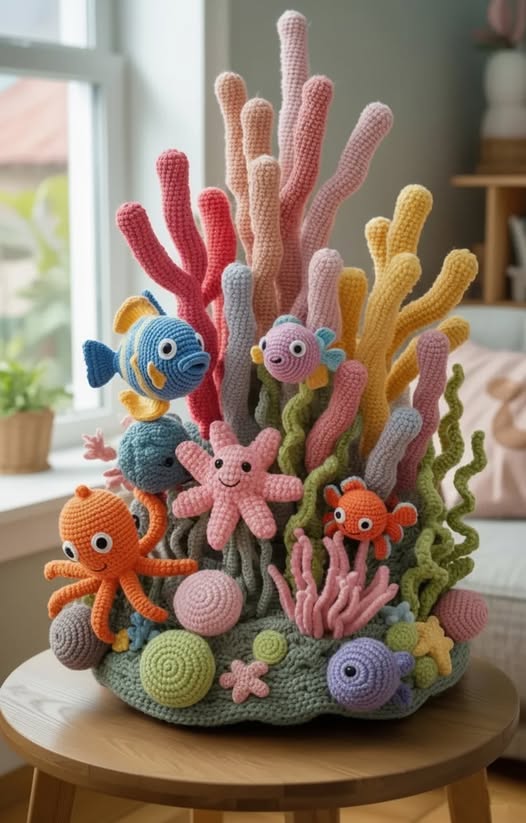
Color Planning and Artistic Design
Color plays a major role in the overall impact of a crochet coral reef.
Popular color palettes include:
- Bright coral red
- Ocean blue
- Tropical orange
- Sea green
- Deep purple
- Soft pink
- Sunshine yellow
Many artists use gradient yarns to simulate the changing light conditions found underwater. Others combine contrasting shades to create dramatic visual effects.
Mixing bold and subtle colors throughout the design helps maintain balance while drawing attention to focal points.
Crochet Techniques Commonly Used
A variety of stitch techniques can be incorporated into a coral reef project.
Some of the most frequently used methods include:
Spirals
Spiral crochet creates twisting coral formations that mimic natural marine growth.
Hyperbolic Crochet
Hyperbolic crochet uses strategic increases to create ruffled, wavy structures that resemble lettuce coral and sea organisms.
Surface Crochet
Surface stitches add texture and detail while enhancing dimensional effects.
Loop Stitch
Loop stitches create soft, flowing elements similar to underwater vegetation.
Cluster Stitches
Clusters introduce dense texture and visual complexity.
By combining several techniques within one project, crocheters can achieve a highly realistic reef appearance.
Tips for Beginners
Although coral reef crochet may appear complex, beginners can successfully create beautiful results by starting with simple components.
Helpful tips include:
- Practice basic spirals first.
- Use medium-weight yarn.
- Focus on texture rather than perfection.
- Experiment with color combinations.
- Create small motifs before attempting larger displays.
The beauty of coral reef crochet lies in its flexibility. Minor variations often enhance the final design rather than detract from it.
Creative Display Ideas
Crochet coral reefs can be used in many unique ways.
Popular applications include:
Wall Art
Create a framed underwater scene filled with colorful coral elements.
Table Centerpieces
Arrange coral motifs into an eye-catching decorative display.
Educational Projects
Use crochet coral reefs to teach children about marine ecosystems and ocean conservation.
Textile Sculptures
Construct three-dimensional reefs using internal supports and layered motifs.
Home Decor
Incorporate coral pieces into cushions, blankets, baskets, and decorative accessories.
Frequently Asked Questions
Is the Crochet Coral Reef Pattern suitable for beginners?
Yes. Beginners can start with basic shapes and gradually explore more advanced textures.
Can I use leftover yarn?
Absolutely. Scrap yarn is perfect for creating colorful coral formations.
Do I need special crochet skills?
No. Basic crochet knowledge is enough to begin.
Can I make a large coral reef display?
Yes. The modular design makes it easy to expand projects over time.
What yarn weight works best?
Many crocheters combine multiple yarn weights to create visual variety and realistic scale differences.
Is blocking necessary?
Blocking is optional but can improve the shape and presentation of certain coral elements.
Final Thoughts
The Crochet Coral Reef Pattern is an exciting fusion of crochet, sculpture, and fiber art. By combining color, texture, and creative freedom, crocheters can build breathtaking underwater-inspired displays that showcase both technical skill and artistic expression.
Whether you’re creating a small decorative accent or an elaborate textile installation, this project offers endless opportunities for creativity. Its flexibility, visual impact, and artistic appeal make it one of the most rewarding crochet projects available for modern makers.
Skill Level
Intermediate to Advanced
This Crochet Coral Reef Pattern is recommended for crocheters who are comfortable with shaping techniques, textured stitches, and assembling multiple pieces. The project includes various coral forms, sea creatures, and decorative underwater elements that require patience and attention to detail.
While ambitious beginners can certainly attempt the project, some experience with amigurumi and freeform crochet techniques will be beneficial.
Finished Size
The completed crochet coral reef measures approximately:
- Width: 14–16 inches (36–40 cm)
- Height: 11–12.5 inches (28–32 cm)
The final dimensions may vary depending on yarn weight, hook size, and individual tension.
Yarn Requirements
DK or Light Worsted Weight Cotton Yarn
Base and Sea Elements
- Sea Green or Muted Sage (reef base) – approximately 120 g
- Olive or Moss Green (seaweed) – approximately 45 g
Coral Colors
- Coral Red – approximately 30 g
- Salmon – approximately 30 g
- Blush Pink – approximately 35 g
- Pale Peach – approximately 25 g
- Butter Yellow – approximately 30 g
- Lavender or Lilac – approximately 25 g
- Dusty Pink (branch coral) – approximately 35 g
Decorative Elements
- Gray, Blue-Gray, or Lavender (rocks and shells) – approximately 20 g each
- Orange (octopus and crab details) – approximately 35 g
- Blue – approximately 20 g
- Yellow accents – approximately 12 g
- Pink (starfish) – approximately 15 g
- Small amounts of Black and White yarn
Filling Material
- Polyester Fiberfill – approximately 150 g total
Tools Needed
- 2.5 mm crochet hook
- 3.0 mm crochet hook
- Safety eyes (6 mm to 10 mm)
- Tapestry needle
- Stitch markers
- Plastic canvas (optional for the base)
- Floral wire (optional for taller coral structures)
Crochet Abbreviations
- MR = Magic Ring
- sc = Single Crochet
- inc = Increase
- dec = Invisible Decrease
- sl st = Slip Stitch
- ch = Chain
- hdc = Half Double Crochet
- dc = Double Crochet
- FO = Fasten Off
Crochet – Tutorial
FULL PATTERN ACCESS
Pattern Here
You will be redirected to another site