
Keeping shoes organized can be challenging, especially when traveling or storing seasonal footwear. A fabric shoe case with a zipper is an excellent solution because it protects shoes from dust, prevents dirt from spreading to clothing, and makes storage much easier. Best of all, this project is simple enough for beginners and can be customized to match any style.
Creating your own shoe storage case allows you to choose the exact size, fabric, and design that works best for your needs. Whether you want a lightweight travel organizer or a sturdy storage bag for everyday use, this sewing project is both useful and enjoyable.
Why Make a Zippered Shoe Case?
A handmade shoe case offers several advantages over store-bought alternatives. You can select durable fabrics, create custom dimensions, and add extra features such as handles, pockets, or decorative details.
Unlike disposable plastic bags, a reusable fabric case is environmentally friendly and can last for years with proper care. It also provides better protection for shoes while keeping closets, luggage, and storage areas neat and organized.
For sewing enthusiasts, this project is a great opportunity to practice zipper installation and basic bag construction techniques while creating something practical.
Supplies and Materials
Before beginning, gather all the necessary materials.
Fabric Options
Choose a strong fabric that can withstand regular use. Good choices include:
- Cotton canvas
- Denim
- Polyester fabric
- Upholstery-weight cotton
- Outdoor fabric
These materials help the bag maintain its shape and provide protection for footwear.
Additional Materials
You will also need:
- One zipper between 12 and 16 inches long
- Lining fabric
- Fusible interfacing (optional)
- Matching thread
- Fabric scissors
- Measuring tape or ruler
- Sewing pins or clips
- Sewing machine
- Iron
Interfacing is optional but highly recommended if you want a more structured and professional-looking case.
Cutting the Fabric Pieces
The dimensions can be adjusted depending on the type of shoes you plan to store.
For an average pair of sneakers, cut:
- 2 outer fabric pieces measuring approximately 16″ x 10″
- 2 lining pieces measuring 16″ x 10″
- 2 interfacing pieces of the same size if desired
If making a case for larger shoes such as boots, simply increase the width and length accordingly.
Press all fabric pieces before sewing to ensure accurate measurements and cleaner seams.
Installing the Zipper
The zipper is one of the most important components of the project.
Place the zipper right side down along the upper edge of one outer fabric piece. Position one lining piece on top, creating a fabric sandwich with the zipper in the middle.
Secure everything with clips or pins and sew along the zipper edge using a zipper foot.
Once completed, fold the fabrics away from the zipper and press them flat. Repeat the same process for the opposite side of the zipper using the remaining outer and lining pieces.
Topstitch close to the zipper on both sides to give the bag a clean finish and help prevent fabric from catching when opening or closing.
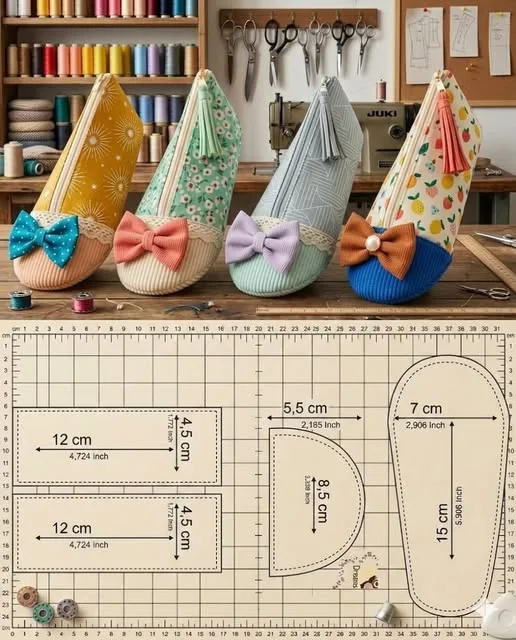
Constructing the Shoe Case
Open the zipper halfway before continuing. This step is important because it will allow you to turn the project right side out later.
Place the outer fabric pieces together with right sides facing each other. Do the same with the lining pieces.
Match all seams carefully and pin around the entire perimeter.
Sew around the edges using a consistent seam allowance, leaving a small opening in the lining section. This opening will be used for turning the bag.
Trim excess fabric from corners to reduce bulk and improve the final shape.
Turning and Finishing
Reach through the opening left in the lining and carefully pull the entire bag right side out.
Push out the corners gently using a blunt tool or chopstick to create crisp edges.
Fold the raw edges of the lining opening inward and sew it closed with a neat straight stitch or an invisible hand stitch.
Push the lining inside the bag and give the entire project a final press with an iron.
Your zippered shoe case is now ready to use.
Creative Customization Ideas
One of the best parts of making your own shoe organizer is the ability to personalize it.
Add a Carrying Handle
A fabric loop or handle makes transportation easier and adds a professional touch.
Include a Divider
A center divider can keep each shoe separated, helping prevent scuffs and scratches.
Use Decorative Fabrics
Try floral prints, geometric patterns, sports-themed fabrics, or classic solid colors to match your personal style.
Add Labels
Fabric labels or embroidered names are perfect for families or travelers who need multiple shoe bags.
Create Matching Sets
Use coordinating fabrics to make a complete collection of travel organizers for shoes, clothing, and accessories.
Helpful Sewing Tips
Choosing quality materials can greatly improve the durability of your finished project.
Always test the zipper before sewing permanently to ensure smooth operation.
If using heavy fabrics such as denim, consider using a stronger needle designed for thick materials.
Reinforcing stress points, especially near the zipper ends and handles, will help the case last longer.
For easy maintenance, select machine-washable fabrics that can be cleaned whenever necessary.
Advantages of a Handmade Shoe Organizer
Making your own shoe storage bag offers several benefits beyond organization.
The project is budget-friendly and often costs less than purchasing a high-quality travel shoe organizer. It is also a great way to use fabric scraps from previous sewing projects.
A custom-made shoe case can be designed for any footwear style, including sneakers, sandals, dress shoes, or athletic shoes. The flexibility of a handmade project allows you to create exactly what you need.
In addition, reusable fabric organizers help reduce waste and support a more sustainable lifestyle.
Frequently Asked Questions
What fabric works best for a shoe storage case?
Strong materials such as canvas, denim, and polyester are excellent choices because they provide durability and protection.
Can beginners complete this project?
Yes. The construction is straightforward and requires only basic sewing skills.
How large should the case be?
A size around 16 by 10 inches works well for most standard shoes, but measurements can be adjusted as needed.
Is a sewing machine required?
While hand sewing is possible, a sewing machine will produce stronger seams and save time.
Can I add extra compartments?
Absolutely. Internal dividers and pockets can be included to create a more organized storage solution.
Why should I use lining fabric?
Lining improves appearance, protects the inside seams, and increases the overall lifespan of the bag.
Final Thoughts
A zippered shoe case is a simple sewing project that combines practicality with creativity. By selecting durable materials, installing a quality zipper, and adding personalized details, you can create an organizer that keeps footwear clean, protected, and easy to transport.
Whether used at home, at the gym, or while traveling, a handmade shoe storage case is a useful accessory that can be customized to fit any lifestyle. With just a few materials and basic sewing techniques, you can create a durable and attractive solution for keeping shoes neatly organized.